
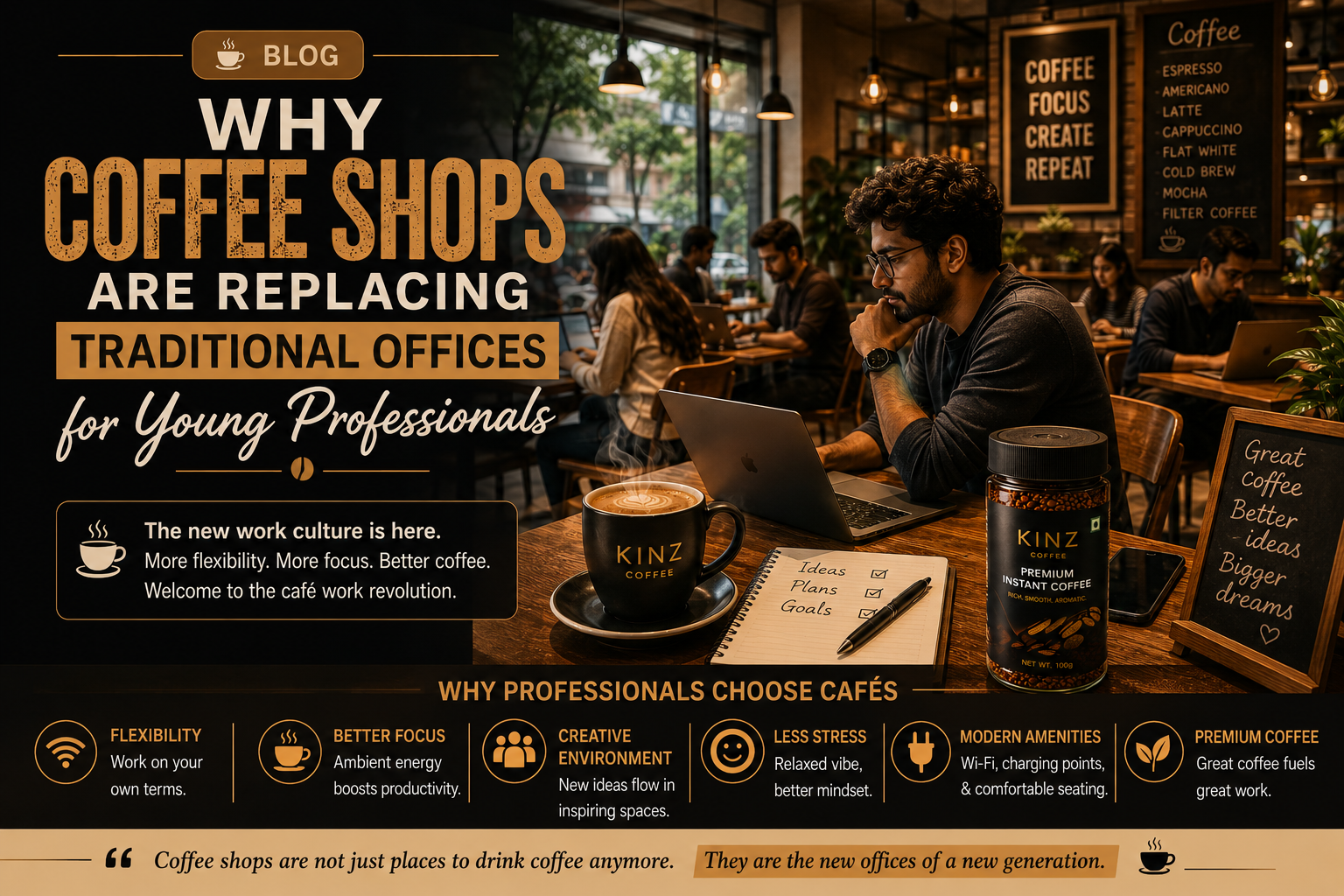
Why Coffee Shops Are Replacing Traditional Offices for Young Professionals
In 2026, coffee shops are no longer just places to drink coffee.
For millions of young professionals, freelancers, creators, students, and startup founders, cafés have become modern workspaces.
Across cities like Bangalore, Mumbai, Hyderabad, Delhi, and Pune, coffee shops are filled with laptops, meetings, brainstorming sessions, and remote workers.
The modern café has evolved into something much bigger than a food business.
It has become a productivity environment.
But why are so many people choosing coffee shops instead of traditional offices?
And why does working inside a café feel more creative, energetic, and motivating?
Let’s explore the psychology, productivity science, and lifestyle trends behind the rise of café work culture.
The Modern Work Culture Has Changed
The traditional office model is changing rapidly.
Remote work, hybrid jobs, freelancing, startup culture, and creator businesses have completely transformed how people work.
Today, many professionals no longer need:
- fixed office desks
- corporate cabins
- formal meeting rooms
- strict office timings
Instead, people now prioritize:
- flexibility
- comfort
- creative environments
- better focus
- work-life balance
Coffee shops naturally fit this new lifestyle.
Why Coffee Shops Feel More Productive
Many people feel surprisingly productive inside cafés.
There are psychological reasons behind this.
Coffee shops create a balance between:
- background activity
- social energy
- personal space
- mental stimulation
Unlike completely silent environments, cafés provide light ambient noise.
Research shows moderate background noise can improve:
- creative thinking
- concentration
- mental engagement
This is one reason many people feel more focused while working in coffee shops.
Coffee Became Connected to Productivity
Coffee has always been associated with:
- energy
- focus
- motivation
- work culture
- creative thinking
For decades, professionals have used coffee as part of their work routines.
Today, café culture strengthens that connection even more.
When people sit in cafés with laptops and coffee, the brain often enters “work mode” automatically.
This creates a strong psychological productivity trigger.
Cafés Feel Less Stressful Than Offices
Traditional office environments can sometimes feel:
- rigid
- stressful
- overly formal
- mentally exhausting
Cafés create a more relaxed atmosphere.
Comfortable seating, music, warm lighting, coffee aroma, and aesthetic interiors help reduce mental pressure.
This relaxed environment often improves:
- creative thinking
- brainstorming
- deep work
- motivation
That is why many startup founders prefer cafés for planning and discussions.
The Rise of Laptop-Friendly Coffee Spaces
Modern cafés are now designed specifically for working professionals.
Many coffee shops now provide:
- fast Wi-Fi
- charging ports
- comfortable chairs
- quiet corners
- large tables
- meeting-friendly spaces
Some cafés even market themselves as “work cafés” or “creative cafés.”
This shift happened because demand increased rapidly after remote work became mainstream.
Café Meetings Feel More Natural
Business meetings inside cafés often feel more relaxed and conversational compared to office meeting rooms.
People feel:
- less pressure
- more comfortable
- more open to discussion
This is why cafés are now common places for:
- client meetings
- startup discussions
- creative collaborations
- networking
- freelancer meetings
Coffee creates a social atmosphere that helps conversations flow naturally.
The Aesthetic Work Lifestyle Trend
Social media also helped accelerate café work culture.
Modern professionals enjoy aesthetically pleasing environments.
People now share:
- laptop setups
- coffee desk photos
- workspace aesthetics
- creative routines
- café productivity content
Coffee shops became part of modern lifestyle branding.
For many people, cafés represent:
- creativity
- independence
- modern ambition
- urban lifestyle
Why Young Professionals Prefer Cafés
Young professionals often value experiences more than traditional corporate systems.
They prefer environments that feel:
- inspiring
- comfortable
- creative
- flexible
Cafés provide all of these.
Unlike office cubicles, coffee shops feel more human and emotionally relaxing.
This emotional comfort improves overall work satisfaction.
Premium Coffee Became Part of Work Culture
As café culture grew, premium coffee also became more popular.
Modern professionals increasingly prefer:
- premium instant coffee
- specialty coffee
- dark roast coffee
- cold coffee
- flavored coffee
People now associate high-quality coffee with better work experiences.
This is why premium coffee brands like Kinz Coffee are becoming part of modern productivity lifestyles.
Home Cafés Are Also Growing
Not everyone works from cafés daily.
But café culture has inspired people to create café-style setups at home.
Many professionals now build:
- coffee corners
- minimal desk setups
- premium coffee routines
- morning productivity rituals
This trend is helping premium coffee consumption grow rapidly.
The Future of Café Work Culture
The connection between cafés and work culture will continue growing in the future.
Future trends may include:
- specialized work cafés
- premium coworking cafés
- coffee subscription workspaces
- AI-powered productivity cafés
- community-focused coffee spaces
The line between cafés, coworking spaces, and offices is becoming smaller every year.
Final Thoughts
Coffee shops are replacing traditional offices for many young professionals because they offer something modern workers value deeply:
- comfort
- creativity
- flexibility
- social energy
- productivity
- lifestyle experience
Modern work is no longer only about sitting inside corporate buildings.
People now want environments that help them think better, feel motivated, and enjoy the process of working.
That is exactly what modern coffee culture provides.
In 2026, cafés are not just serving coffee anymore.
They are shaping the future of work culture itself.
FAQs
Why do people work from coffee shops?
People work from coffee shops because cafés provide comfortable environments, creative energy, good coffee, and flexible workspaces.
Why are cafés becoming popular workspaces?
Remote work, startup culture, freelancing, and hybrid jobs increased demand for flexible and inspiring work environments.
Do coffee shops improve productivity?
Many people feel more productive in cafés because moderate background noise and relaxed environments improve focus and creativity.
Why do startups prefer cafés?
Cafés provide casual meeting environments, creative energy, networking opportunities, and flexible workspaces.
What role does coffee play in work culture?
Coffee is strongly associated with focus, energy, productivity, and modern professional lifestyle routines.