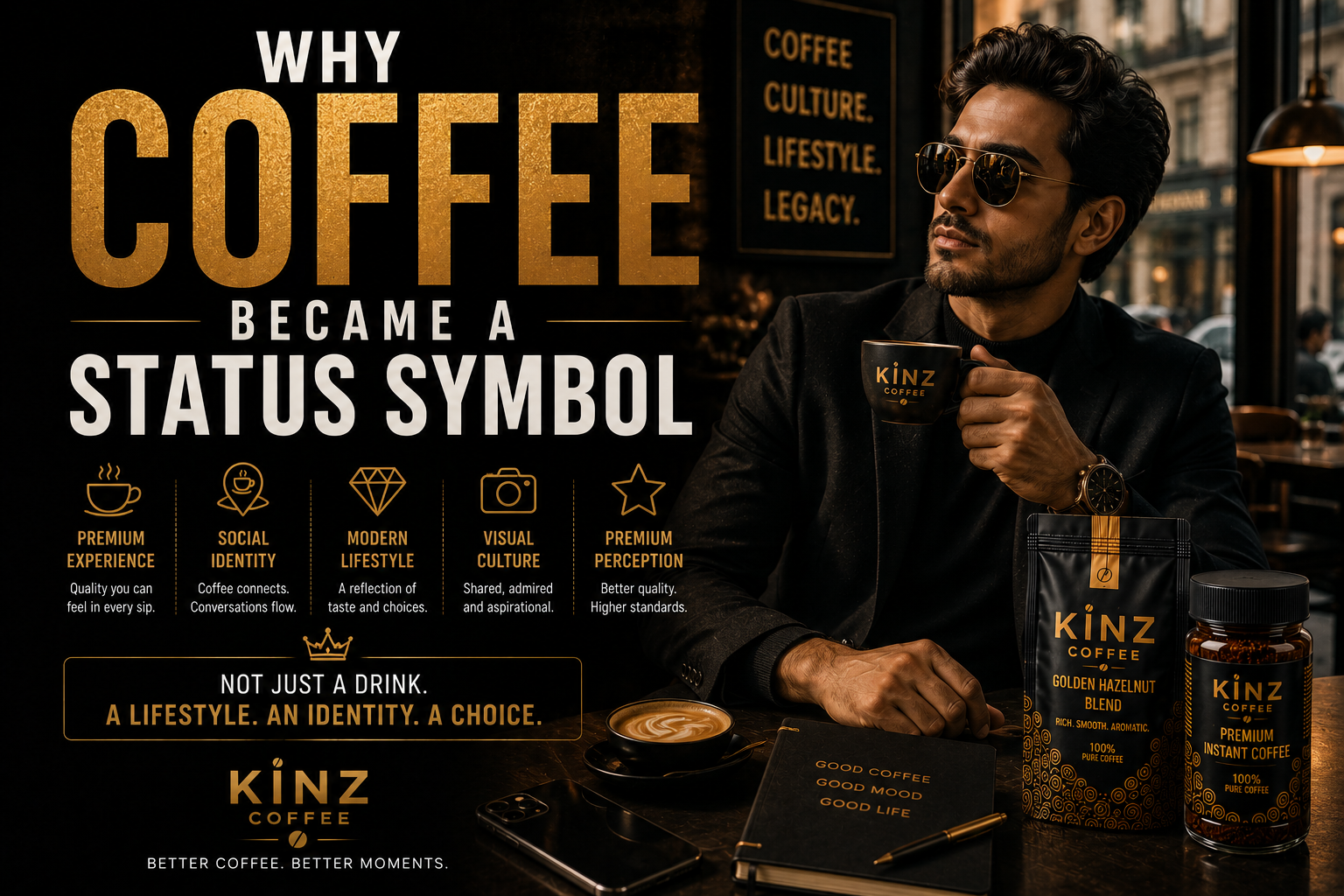
Why Coffee Became a Status Symbol
Coffee was once simply a daily beverage.
Today, it has become something much bigger.
Modern coffee culture now represents:
- lifestyle
- success
- taste
- identity
- personal experience
From premium cafés to luxury coffee setups at home, coffee has evolved into a modern status symbol around the world.
But why did this happen?
The answer is connected to psychology, social behavior, and lifestyle evolution.
Coffee Is No Longer Just About Energy
Years ago, coffee was mostly associated with staying awake or boosting productivity.
Now people connect coffee with:
- self-care
- creativity
- modern living
- social identity
- premium experiences
Drinking coffee has become an emotional and lifestyle-driven ritual.
The Psychology Behind Coffee as a Status Symbol
1. Premium Experiences Signal Lifestyle
People naturally use products and habits to express personality and lifestyle choices.
Premium coffee often represents:
- good taste
- modern lifestyle
- intentional living
- quality preferences
This is why luxury cafés and aesthetic coffee rituals became so popular online.
2. Coffee Shops Became Social Spaces
Modern cafés are designed to feel stylish, relaxing, and aspirational.
People visit cafés not only for coffee, but for:
- meetings
- creative work
- social interaction
- photography
- emotional comfort
The environment itself became part of the experience.
3. Social Media Accelerated Coffee Culture
Platforms like Instagram and Pinterest transformed coffee into visual lifestyle content.
Beautiful coffee cups, cozy cafés, premium packaging, and aesthetic rituals became highly shareable.
That visibility made coffee culture even more aspirational.
Why Premium Coffee Feels More Valuable
Premium coffee creates a stronger sensory and emotional experience.
Consumers increasingly value:
- rich aroma
- smooth taste
- beautiful packaging
- high-quality ingredients
- intentional rituals
People today often prefer fewer but better experiences.
This shift is driving the growth of premium coffee culture worldwide.
The Rise of Premium Coffee Culture in India
India’s coffee industry is rapidly evolving.
Consumers are becoming more aware of:
- premium instant coffee
- specialty cafés
- coffee aesthetics
- luxury lifestyle habits
- coffee quality differences
Coffee is increasingly associated with ambition, modernity, and lifestyle expression.
Why Coffee Rituals Feel So Personal
Many people emotionally connect coffee with:
- morning peace
- focus
- creative thinking
- late-night work
- comfort and relaxation
That emotional connection makes coffee feel more meaningful than an ordinary drink.
How Kinz Coffee Fits Modern Coffee Culture
Kinz Coffee is built around premium experience, rich aroma, smooth taste, and meaningful daily rituals.
Because modern coffee lovers want more than caffeine.
They want coffee that feels intentional, premium, and emotionally satisfying.
Explore Premium Coffee by Kinz Coffee →
Final Thoughts
Coffee became a status symbol because modern consumers increasingly value experiences, atmosphere, identity, and emotional comfort.
Today, coffee represents much more than energy.
It represents lifestyle.
And premium coffee culture continues growing because people want everyday moments that feel richer, calmer, and more meaningful.
Frequently Asked Questions
Why is coffee considered a status symbol?
Coffee became a status symbol because premium coffee culture is connected to lifestyle, identity, aesthetics, and modern social behavior.
Why are premium cafés popular?
Premium cafés provide atmosphere, emotional comfort, social connection, and a more enjoyable overall experience.
How did social media influence coffee culture?
Social media made coffee rituals, cafés, and premium coffee aesthetics highly visible and aspirational.
Why are people upgrading to premium coffee?
Consumers increasingly prefer better quality, richer experiences, smoother taste, and intentional daily rituals.
Is premium coffee culture growing in India?
Yes. India is seeing rapid growth in premium coffee demand, café culture, and lifestyle-driven coffee consumption.