
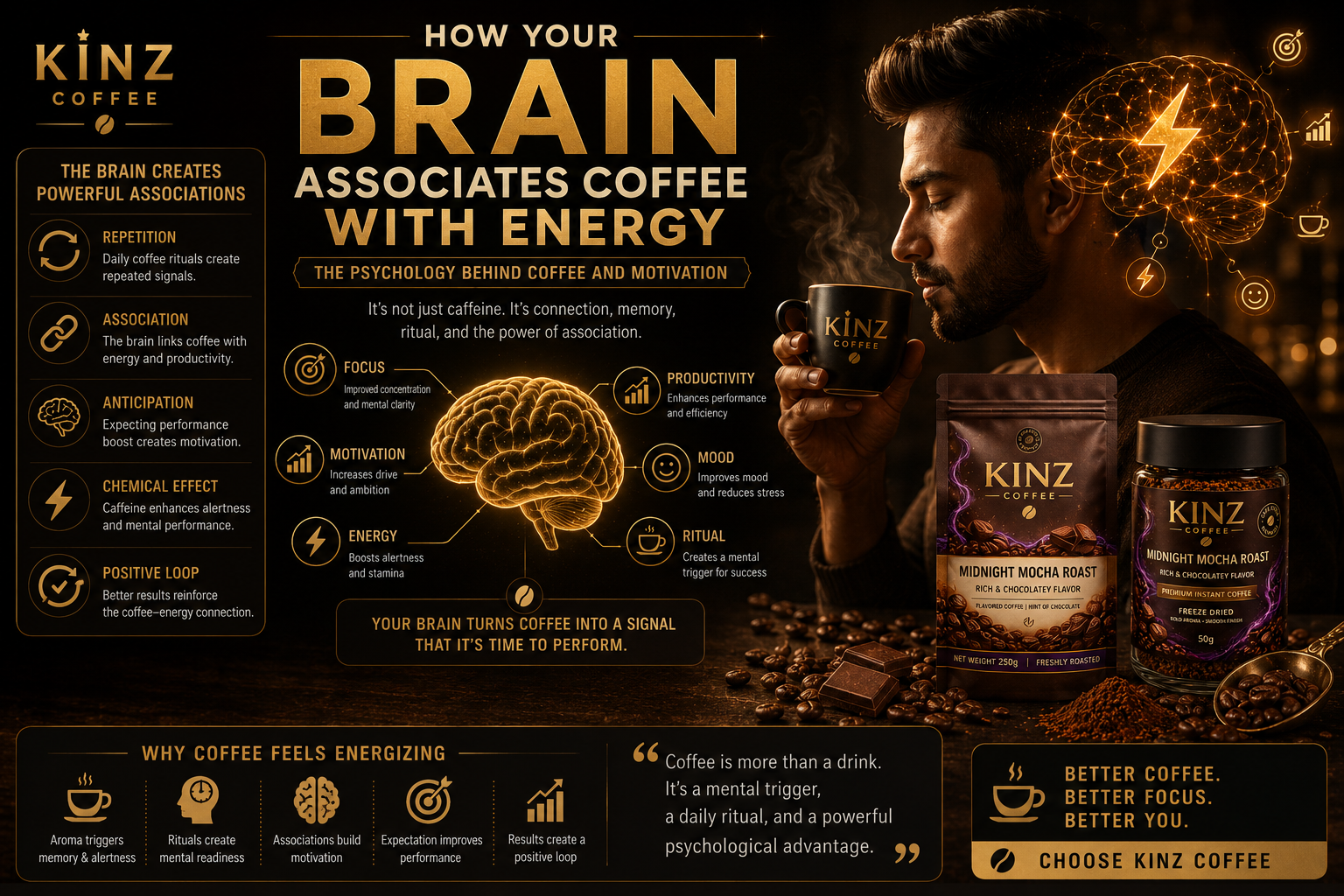
How Your Brain Associates Coffee With Energy: The Psychology Behind Coffee and Motivation
For millions of people, coffee instantly feels connected to energy, focus, and productivity.
Even before taking the first sip, the smell of coffee alone can make people feel mentally awake and emotionally prepared for the day.
But why does this happen?
The answer goes far beyond caffeine itself. Psychology, sensory memory, emotional conditioning, and daily habits all shape how the brain connects coffee with motivation and mental performance.
Over time, coffee becomes more than a drink. It becomes a mental trigger.
The Brain Learns Through Association
The human brain constantly builds associations between experiences, emotions, and routines.
When certain activities repeatedly happen together, the brain starts linking them automatically.
This is called associative learning.
For example, if someone drinks coffee every morning before work, study sessions, creative tasks, or focused routines, the brain gradually connects coffee with:
- Energy
- Focus
- Productivity
- Mental alertness
- Motivation
Eventually, coffee itself becomes part of the mental preparation process.
Why Coffee Smell Feels Energizing
One of the strongest psychological triggers connected to coffee is aroma.
Smell is deeply connected to memory and emotional processing in the brain. Because of repeated experiences, the aroma of coffee often becomes associated with:
- Morning routines
- Starting the day
- Work focus
- Achievement
- Personal rituals
This is why simply smelling coffee can sometimes make people feel mentally prepared before caffeine even takes effect.
Coffee Rituals Create Mental Readiness
Daily rituals psychologically prepare the brain for specific activities.
The process of:
- Making coffee
- Hearing the brewing sounds
- Watching steam rise
- Holding a warm cup
- Taking the first sip
creates a powerful mental transition.
The brain interprets these repeated signals as the beginning of focus mode or productivity mode.
This is why coffee rituals feel emotionally energizing even beyond physical stimulation.
The Psychology of Productivity and Coffee
Modern culture strongly connects coffee with achievement and performance.
Coffee appears constantly in:
- Workspaces
- Creative studios
- Morning routines
- Startup culture
- Study environments
These repeated visual associations strengthen the brain’s belief that coffee represents productivity and ambition.
Over time, coffee becomes emotionally linked to progress and accomplishment.
Why Coffee Feels Motivating
Coffee often creates anticipation.
The brain begins expecting:
- Increased focus
- Mental clarity
- Improved mood
- Productive energy
- Creative momentum
This expectation itself can influence emotional state and motivation.
Psychology calls this expectancy effect, where belief and routine influence how experiences feel.
Why Warm Coffee Feels Mentally Comforting
Warm beverages naturally create feelings of comfort and emotional calmness.
Holding a warm cup of coffee can psychologically create:
- Relaxation
- Emotional grounding
- Mental stability
- Reduced stress
- Comfortable focus
This balance of calmness and alertness is one reason coffee rituals feel uniquely satisfying.
Why Coffee and Focus Feel Connected
Many people repeatedly use coffee during mentally demanding tasks.
Over time, the brain begins linking coffee with:
- Deep work
- Concentration
- Creative thinking
- Problem solving
- Mental endurance
Eventually, even the ritual itself starts triggering a focused mindset.
This is why coffee often becomes part of study routines, office culture, and creative work habits.
Premium Coffee Creates a Better Mental Experience
Premium coffee often creates a stronger sensory and emotional experience.
Richer aroma, smoother taste, and balanced flavor can make the ritual feel more enjoyable and intentional.
When the experience feels refined, the emotional association becomes stronger too.
This is one reason premium coffee rituals often feel more motivating and satisfying.
Why Coffee Became a Lifestyle Symbol
Coffee is no longer viewed as only a beverage.
It has become a symbol of:
- Creativity
- Ambition
- Productivity
- Modern routines
- Intentional living
This cultural symbolism strengthens how emotionally connected people feel to coffee rituals.
How Kinz Coffee Supports Better Coffee Moments
Kinz Coffee is crafted for people who want coffee to feel smooth, rich, motivating, and meaningful.
From premium aroma to balanced flavor, every detail is designed to create coffee moments that support focus, creativity, and better everyday rituals.
Because coffee is not only about staying awake.
It is about feeling mentally prepared to create, think, and move forward.
Explore Premium Coffee by Kinz Coffee →
Final Thoughts
The brain does not associate coffee with energy only because of caffeine.
It also connects coffee with:
- Routine
- Focus
- Motivation
- Comfort
- Productivity
Over time, coffee becomes a psychological signal that prepares people emotionally and mentally for the day ahead.
That is the powerful connection between coffee, energy, and the human mind.
Frequently Asked Questions
Why does coffee make people feel energized?
Beyond caffeine, the brain associates coffee with productivity, focus, routines, and motivation through repeated experiences.
Why does coffee smell feel energizing?
The aroma of coffee becomes emotionally linked to mornings, focus, work, and daily rituals through sensory memory.
What is associative learning in coffee psychology?
Associative learning happens when the brain repeatedly connects coffee with energy, productivity, and mental focus.
Why do coffee rituals improve focus?
Repeated coffee routines psychologically prepare the brain for concentration, productivity, and creative work.
Why does premium coffee feel more motivating?
Premium coffee often creates a richer sensory experience, making coffee rituals feel more satisfying and intentional.