
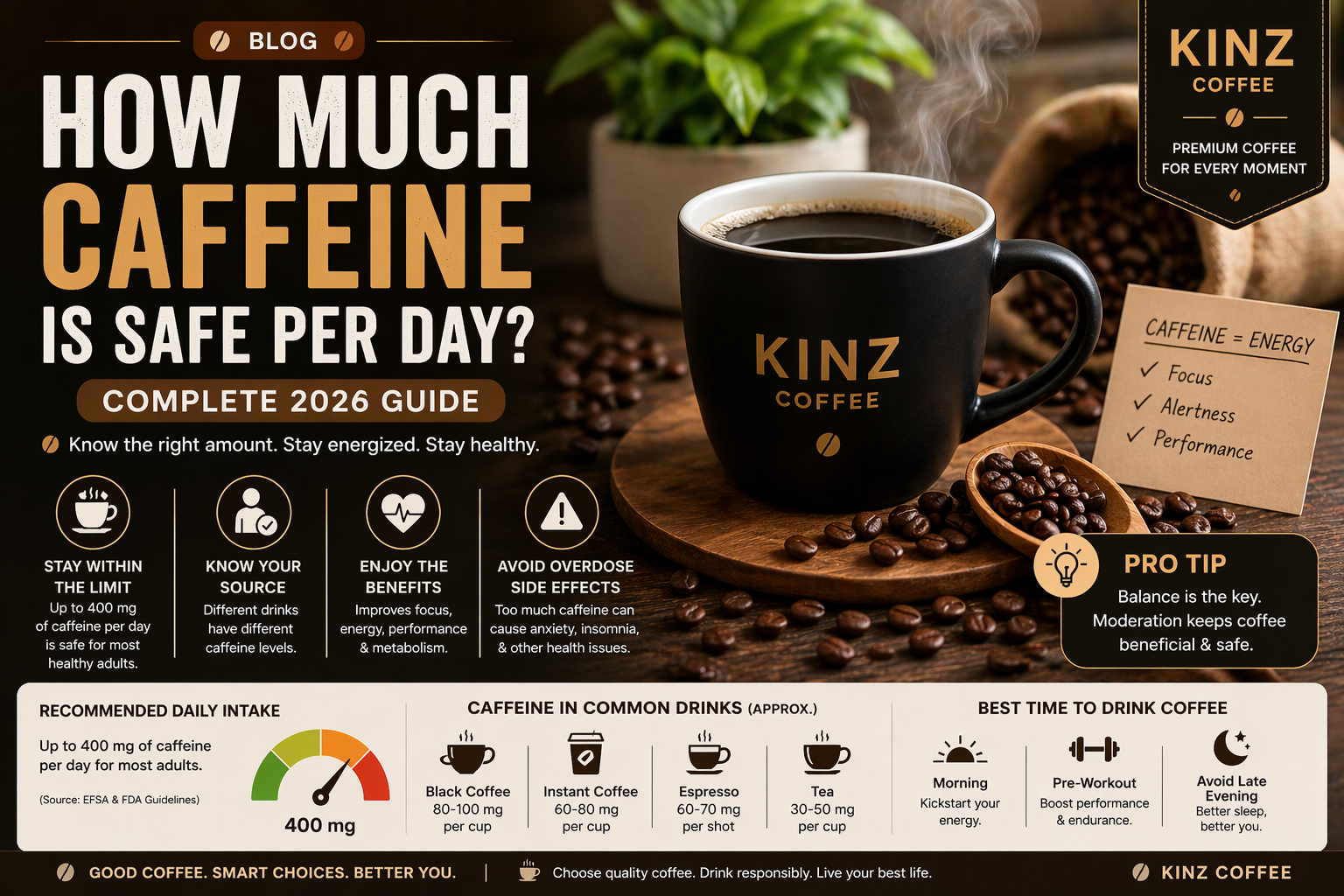
How Much Caffeine Is Safe Per Day? (Complete 2026 Guide)
Caffeine is one of the most widely consumed stimulants in the world. From morning coffee and tea to energy drinks and pre-workout beverages, millions of people rely on caffeine every day for energy, focus, and productivity.
But how much caffeine is actually safe?
While caffeine can improve alertness and mental performance, consuming too much may lead to side effects such as sleep problems, anxiety, restlessness, and increased heart rate.
Understanding safe caffeine intake helps you enjoy coffee and caffeinated drinks in a healthier and more balanced way.
In this complete 2026 guide, we explain safe caffeine limits, caffeine content in common drinks, benefits of moderate caffeine intake, possible side effects, and the best ways to consume coffee responsibly.
What Is Caffeine?
Caffeine is a natural stimulant found in coffee beans, tea leaves, cacao, and several other plants.
It works by stimulating the central nervous system, helping reduce feelings of tiredness and improving alertness.
This is why caffeine is commonly associated with:
- Morning energy
- Improved focus
- Productivity
- Workout performance
- Mental alertness
Coffee remains one of the most popular and natural sources of caffeine worldwide.
How Much Caffeine Is Safe Per Day?
For most healthy adults, up to approximately 400 mg of caffeine per day is generally considered safe.
This amount is roughly equal to:
- 3–4 cups of brewed coffee
- 5–6 cups of tea
- Several small servings of espresso
However, caffeine tolerance varies from person to person depending on:
- Age
- Body size
- Genetics
- Sleep quality
- Medication use
- Overall health
Some people may feel strong caffeine effects even with smaller amounts.
Caffeine Content in Common Drinks
Drink Approximate Caffeine
Black Coffee
80–100 mg per cup
Instant Coffee
60–80 mg per cup
Espresso
60–70 mg per shot
Tea
30–50 mg per cup
Energy Drinks
80–150 mg per serving
Soft Drinks
20–50 mg per can
Actual caffeine levels can vary depending on brewing method, serving size, and product type.
Benefits of Moderate Caffeine Intake
When consumed in moderation, caffeine may provide several benefits.
1. Improves Focus and Alertness
Caffeine may help improve concentration, attention, and mental clarity during work, study, and daily activities.
2. Supports Energy Levels
Coffee is commonly used to reduce fatigue and improve energy throughout the day.
3. Enhances Workout Performance
Many people consume coffee before workouts because caffeine may support endurance and exercise performance.
4. May Support Metabolism
Caffeine is often associated with temporary metabolic stimulation and increased energy expenditure.
Side Effects of Too Much Caffeine
Excess caffeine intake may lead to unwanted side effects, especially for individuals who are sensitive to stimulants.
Common side effects include:
- Sleep problems or insomnia
- Increased heart rate
- Jitters or shakiness
- Anxiety or nervousness
- Digestive discomfort
- Restlessness
- Headaches
Very high caffeine intake may also negatively affect sleep quality and recovery.
Signs You May Be Consuming Too Much Caffeine
You may want to reduce caffeine if you frequently experience:
- Trouble sleeping
- Rapid heartbeat
- Constant jitteriness
- High anxiety after coffee
- Dependence on caffeine for normal energy
- Energy crashes later in the day
Who Should Limit Caffeine?
Certain individuals may need to monitor or reduce caffeine intake more carefully.
1. Pregnant Women
Pregnant women are often advised to limit caffeine intake and follow medical guidance regarding safe consumption.
2. People Sensitive to Caffeine
Some individuals naturally react more strongly to caffeine and may experience side effects even at lower amounts.
3. Individuals With Certain Health Conditions
People with heart conditions, severe anxiety, or sleep disorders may need to limit caffeine intake depending on professional advice.
Best Time to Drink Coffee
Morning Coffee
Morning is generally considered one of the best times to enjoy coffee because it helps improve alertness and productivity for the day ahead.
Before Workouts
Many people drink coffee before workouts to support energy and exercise performance.
Avoid Late-Night Coffee
Drinking coffee too late in the evening may interfere with sleep quality and recovery.
Many experts recommend avoiding caffeine within several hours of bedtime.
Healthy Tips for Caffeine Consumption
- Limit coffee intake to moderate amounts
- Avoid excessive sugar and syrups
- Stay hydrated throughout the day
- Pay attention to your sleep quality
- Choose quality coffee over excessive quantity
- Avoid relying entirely on caffeine for energy
Does Coffee Quality Matter?
Yes. Higher-quality coffee often provides:
- Smoother taste
- Better aroma
- Reduced bitterness
- More enjoyable daily coffee experience
At Kinz Coffee, we focus on creating premium blends designed for smoother energy, balanced flavor, and enjoyable everyday coffee routines.
You can also explore our related coffee guides:
- Best Coffee for Weight Loss: Myth or Reality?
- Coffee vs Energy Drinks: Which Is Better for Focus & Health?
- Is Instant Coffee Good for Health?
Final Thoughts
Caffeine can be a powerful tool for energy, productivity, and focus when consumed responsibly.
For most healthy adults, moderate daily caffeine intake is generally considered safe and beneficial.
The key is understanding your own tolerance, avoiding excessive consumption, and maintaining healthy lifestyle habits alongside your coffee routine.
When enjoyed mindfully, coffee can become a positive and enjoyable part of your everyday lifestyle.
Frequently Asked Questions (FAQs)
Is 2 cups of coffee per day safe?
Yes, for most healthy adults, 2 cups of coffee per day is generally considered safe.
What happens if I drink too much caffeine?
Too much caffeine may cause anxiety, jitteriness, sleep problems, rapid heartbeat, and digestive discomfort.
Can I drink coffee every day?
Yes, moderate daily coffee consumption is considered safe for most healthy adults.
How much caffeine is too much?
Consuming significantly more than 400 mg of caffeine daily may increase the risk of side effects for many people.
Is instant coffee high in caffeine?
Instant coffee usually contains less caffeine than brewed black coffee, but caffeine levels vary depending on serving size and preparation.