
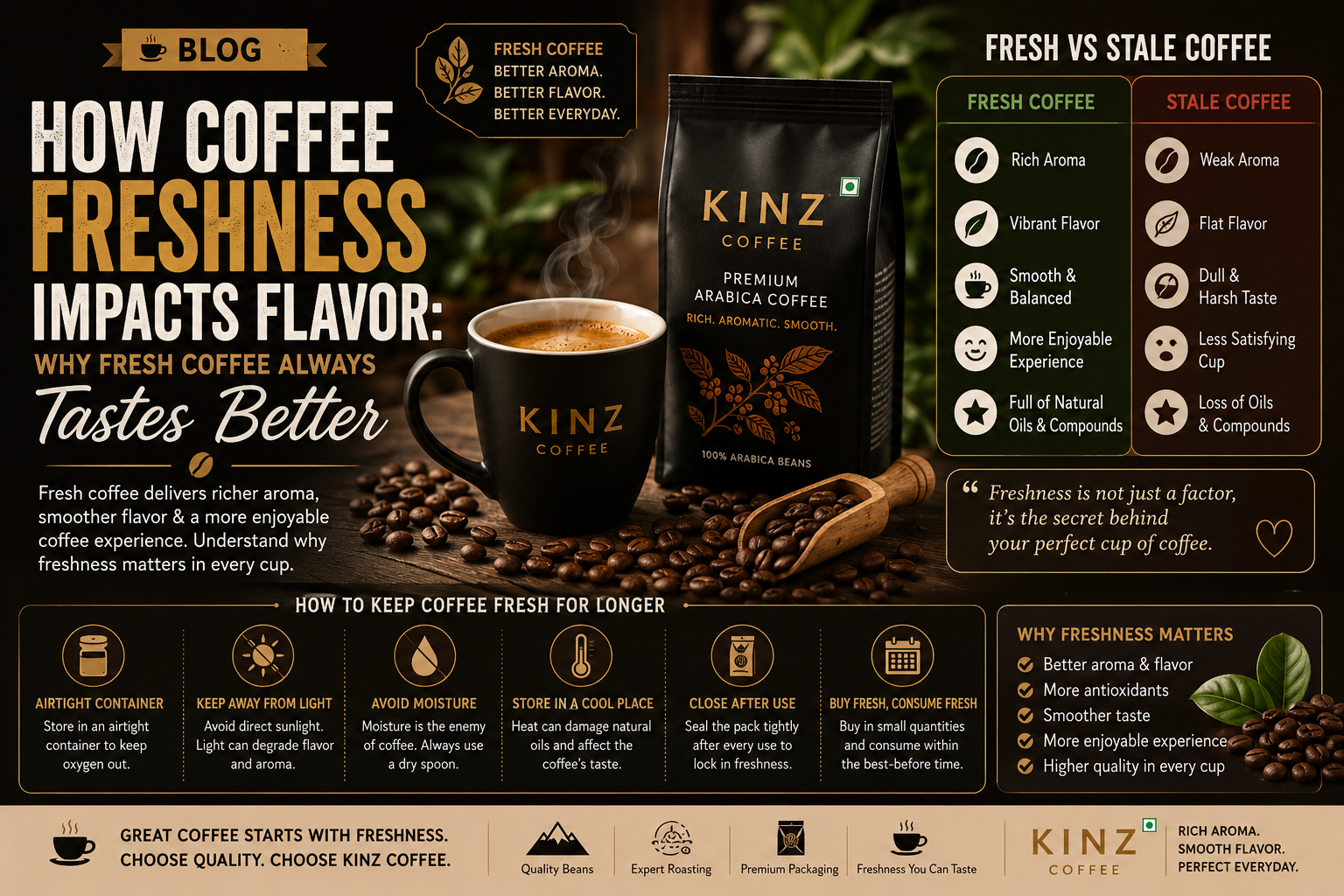
How Coffee Freshness Impacts Flavor: Why Fresh Coffee Always Tastes Better
Coffee lovers often focus on bean varieties, roast levels, brewing methods, and caffeine content, but one factor has a massive impact on the quality of every cup: freshness. Whether you enjoy premium instant coffee, freshly ground coffee, or specialty coffee blends, freshness directly affects aroma, flavor, body, and overall drinking experience.
Many people don't realize that coffee begins changing the moment it is roasted and processed. Over time, exposure to oxygen, moisture, heat, and light slowly reduces the qualities that make coffee enjoyable. This is why fresh coffee often tastes vibrant, aromatic, and smooth, while older coffee may seem dull, flat, or lifeless.
If you're investing in premium coffee, understanding freshness can help you get the maximum flavor from every cup.
Why Coffee Starts Changing After Production
Coffee is a natural agricultural product containing hundreds of aromatic compounds responsible for its taste and fragrance. These compounds are delicate and begin breaking down over time.
When coffee is freshly processed, it contains rich volatile oils and aromatic compounds that create the pleasant smells and flavors coffee lovers enjoy. As time passes, these compounds gradually dissipate, reducing the complexity and richness of the coffee.
Even the highest-quality coffee beans can lose some of their character if stored improperly for extended periods.
If you want to understand the quality differences between coffee varieties, you can also read our guide on Arabica vs Robusta Coffee.
The Connection Between Freshness and Aroma
One of the first signs of fresh coffee is its aroma. The rich fragrance released when opening a coffee package comes from volatile compounds naturally present in coffee.
These aromatic compounds are responsible for notes such as:
- Chocolate
- Caramel
- Nuts
- Fruit
- Floral notes
- Cocoa
- Brown sugar
As coffee ages, these compounds slowly disappear. This is why older coffee often smells weaker compared to freshly packed coffee.
Aroma plays a significant role in how humans perceive flavor. In fact, much of what we identify as "taste" actually comes from smell. Fresh coffee therefore delivers a more complete sensory experience.
How Oxygen Affects Coffee Flavor
Oxygen is one of coffee's biggest enemies.
When coffee is exposed to air, a process called oxidation begins. Oxidation slowly alters the oils and flavor compounds inside the coffee, causing them to degrade.
This process can lead to:
- Loss of aroma
- Reduced flavor complexity
- Flat taste
- Less sweetness
- Reduced smoothness
- Dull coffee experience
This is one reason why premium coffee brands invest heavily in airtight packaging technologies designed to reduce oxygen exposure.
In our next article, we'll explore this topic further in detail through our guide on Coffee Oxidation and Why Oxygen Is Coffee's Biggest Enemy.
Why Stale Coffee Loses Its Rich Taste
Fresh coffee typically provides a balanced combination of aroma, sweetness, body, and flavor complexity.
As coffee becomes stale, several noticeable changes occur:
- Aroma becomes weaker
- Flavor becomes less vibrant
- Body feels thinner
- Sweet notes become harder to detect
- Coffee may taste flat or muted
Many people assume bitterness alone indicates strong coffee. In reality, freshness often contributes more to overall flavor quality than intensity.
Premium coffee should taste rich, smooth, and aromatic rather than simply strong.
Fresh Coffee vs Old Coffee: Key Differences
Fresh Coffee Older Coffee
Rich aroma
Weak aroma
Balanced flavor
Flat flavor
Smooth finish
Dull finish
Complex taste profile
Reduced complexity
Enjoyable drinking experience
Less satisfying cup
Even casual coffee drinkers can often notice the difference between a freshly packed coffee product and one that has been stored poorly.
How Packaging Helps Preserve Freshness
Modern coffee packaging is designed to protect coffee from environmental factors that accelerate quality loss.
High-quality packaging helps reduce exposure to:
- Oxygen
- Moisture
- Heat
- Sunlight
- External odors
Premium coffee brands often use specialized packaging materials and sealing technologies to maintain product quality for longer periods.
This is one reason why packaging plays an important role in coffee quality and consumer perception.
You can also explore our article on Why Coffee Packaging Affects Taste Perception.
Best Ways to Keep Coffee Fresh at Home
Even the best coffee can lose quality if stored improperly after opening.
To maintain freshness:
- Keep coffee in a cool, dry place.
- Avoid direct sunlight.
- Close the container tightly after use.
- Keep moisture away from the coffee.
- Avoid transferring coffee between multiple containers unnecessarily.
Proper storage helps preserve the flavor and aroma of coffee for a longer period.
For detailed storage recommendations, read our guide on How to Store Coffee Beans to Keep Them Fresh.
Why Premium Coffee Brands Focus on Freshness
Freshness is one of the key factors separating premium coffee from lower-quality alternatives.
Premium coffee brands understand that consumers expect:
- Better aroma
- Consistent flavor
- Smoother drinking experience
- Higher-quality ingredients
- Reliable freshness
This is why premium coffee companies invest in sourcing, packaging, quality control, and storage systems that help maintain coffee quality from production to consumption.
If you're interested in understanding premium coffee quality, you may also enjoy our guide on Why Premium Coffee Tastes Different and Why It's Worth It.
How Freshness Influences Your Daily Coffee Experience
Freshness doesn't just affect flavor—it influences the entire coffee experience.
Fresh coffee often feels:
- More aromatic
- More satisfying
- More enjoyable
- More flavorful
- More memorable
Whether you're preparing coffee before work, during study sessions, or as part of a relaxing evening routine, freshness helps maximize the value of every cup.
Frequently Asked Questions
Does fresh coffee really taste better?
Yes. Fresh coffee generally delivers stronger aroma, better flavor balance, and a richer overall drinking experience.
Why does coffee lose flavor over time?
Coffee naturally loses aromatic compounds through oxidation and environmental exposure, which gradually reduces flavor quality.
How can I keep coffee fresh longer?
Store coffee in a sealed container away from heat, moisture, and direct sunlight.
Does packaging affect freshness?
Yes. High-quality packaging helps protect coffee from oxygen and environmental factors that can reduce quality.
Is freshness important for instant coffee?
Absolutely. While instant coffee is designed for convenience and stability, freshness still contributes to better aroma and flavor.
Final Thoughts
Coffee freshness is one of the most important factors influencing flavor, aroma, and overall quality. Fresh coffee provides a richer sensory experience, while stale coffee often loses many of the characteristics that make coffee enjoyable.
By understanding how freshness works, choosing quality coffee products, and storing them properly, you can enjoy a consistently better cup every day.
At Kinz Coffee, we believe great coffee starts with quality ingredients, careful processing, and a commitment to delivering a fresh, enjoyable coffee experience in every cup.