
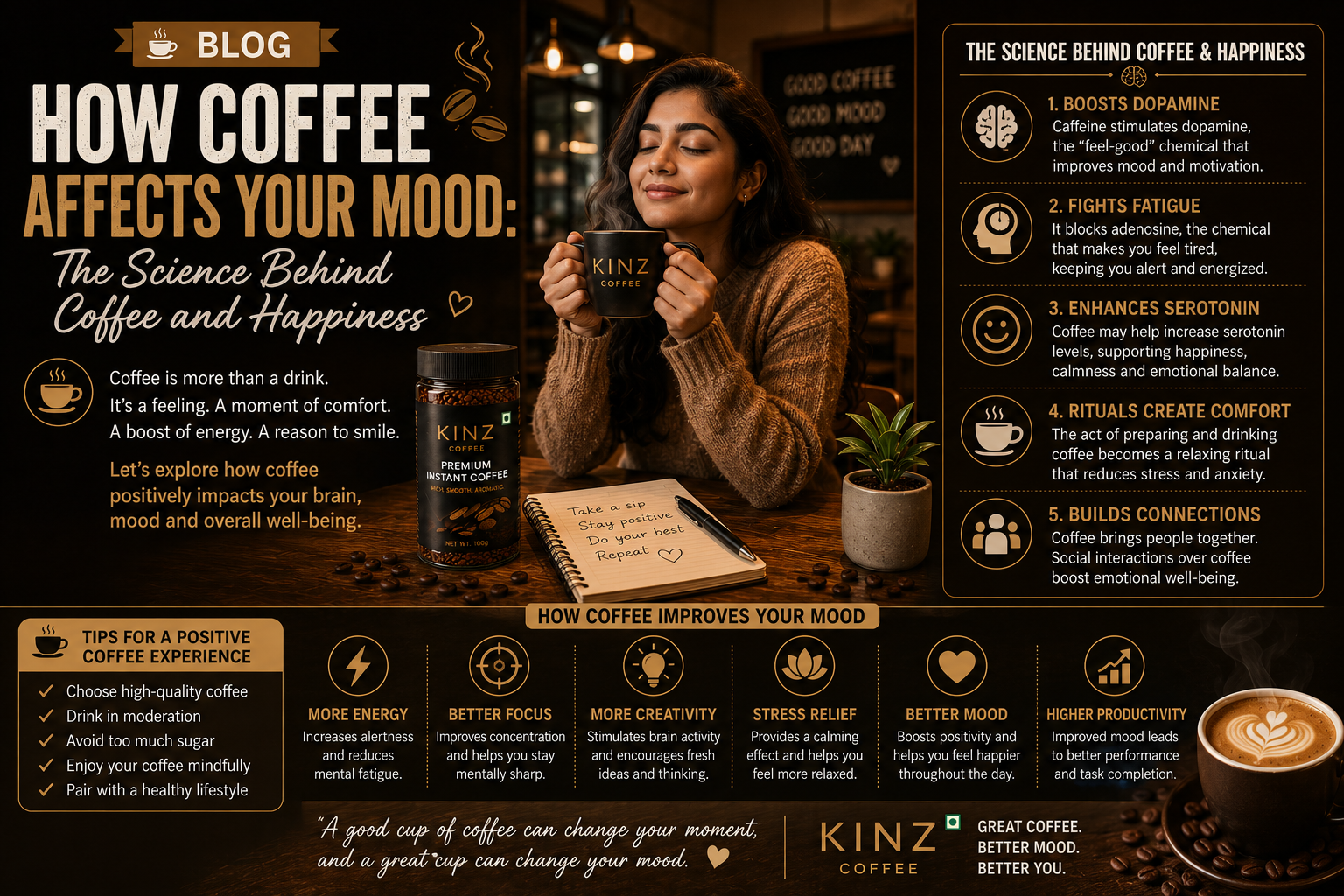
How Coffee Affects Your Mood: The Science Behind Coffee and Happiness
Coffee is much more than a beverage.
For millions of people around the world, coffee is connected to happiness, comfort, energy, focus, relaxation, motivation, and emotional balance. A simple cup of coffee can completely change how a person feels during the day.
But why does coffee have such a strong emotional effect on people?
Why does the smell of coffee feel comforting? Why do people feel happier, calmer, more productive, or more motivated after drinking coffee?
The answer lies in psychology, brain chemistry, sensory experience, and human behavior.
Coffee affects mood in multiple ways — physically, mentally, emotionally, and socially.
In this complete guide, we explore the science behind coffee and happiness, how coffee affects mood, and why coffee has become one of the world’s most emotionally connected drinks.
The Emotional Connection People Have With Coffee
Coffee is deeply connected to daily routines and emotions.
For many people, coffee represents:
- Comfort
- Relaxation
- Energy
- Productivity
- Peaceful mornings
- Social bonding
- Personal rituals
- Mental reset
Over time, the brain creates emotional associations with coffee experiences.
This is why even the smell or sight of coffee can instantly trigger positive feelings.
How Coffee Affects Brain Chemistry
1. Coffee and Dopamine
One of the biggest reasons coffee improves mood is dopamine.
Dopamine is a neurotransmitter associated with:
- Motivation
- Pleasure
- Reward
- Focus
- Positive emotions
Caffeine stimulates brain activity and indirectly increases dopamine signaling.
This creates feelings of alertness, satisfaction, and improved mood.
That “good feeling” many people experience after coffee is partly connected to dopamine activation.
2. Coffee Blocks Adenosine
Adenosine is a chemical that makes the body feel tired.
As the day progresses, adenosine levels increase, causing fatigue and mental slowdown.
Caffeine blocks adenosine receptors in the brain.
This helps people feel:
- More awake
- More energetic
- Mentally sharper
- Emotionally refreshed
Reduced fatigue often directly improves mood and motivation.
3. Coffee and Serotonin Balance
Some studies suggest that moderate coffee consumption may positively influence serotonin pathways.
Serotonin is associated with:
- Emotional stability
- Calmness
- Mood balance
- Mental well-being
While coffee is not a replacement for mental health care, moderate coffee rituals can contribute to emotional comfort and daily mood improvement.
Why Coffee Smells So Comforting
Coffee aroma has a surprisingly strong emotional effect.
The smell of freshly brewed coffee activates areas of the brain connected to:
- Memory
- Pleasure
- Comfort
- Relaxation
This is why coffee often creates nostalgic or calming feelings.
For many people, coffee aroma is connected to:
- Peaceful mornings
- Family moments
- Work rituals
- Study sessions
- Relaxing café experiences
These emotional memories strengthen the positive mood effects of coffee.
The Psychology of Coffee Rituals
Interestingly, coffee happiness is not only about caffeine.
The ritual itself matters.
The process of:
- Preparing coffee
- Hearing water boil
- Smelling the aroma
- Holding a warm cup
- Taking the first sip
creates a calming psychological experience.
Daily rituals help the brain feel stable and emotionally secure.
This is one reason coffee rituals reduce stress for many people.
Why Coffee Improves Productivity and Confidence
When people feel mentally alert, they often feel emotionally better too.
Coffee can improve:
- Focus
- Reaction time
- Mental clarity
- Motivation
- Task performance
Completing tasks successfully increases confidence and satisfaction.
This creates a positive cycle between coffee, productivity, and mood.
Coffee and Social Happiness
Coffee is one of the world’s most social beverages.
People connect over coffee every day.
Coffee shops create environments for:
- Friendships
- Conversations
- Meetings
- Dates
- Creative discussions
- Family bonding
Human connection strongly affects happiness.
This is another reason coffee becomes emotionally meaningful.
Can Coffee Reduce Stress?
In moderate amounts, coffee can help some people feel calmer and emotionally balanced.
Warm beverages naturally create relaxation responses in the body.
Additionally, taking coffee breaks provides mental recovery time during stressful days.
However, excessive caffeine may increase anxiety for sensitive individuals.
Balance is important.
Why Premium Coffee Creates a Better Mood Experience
Premium coffee improves the emotional experience because quality affects satisfaction.
Smooth flavor, balanced aroma, low bitterness, and rich texture create a more enjoyable sensory experience.
Cheap coffee may feel harsh or unpleasant, while premium coffee feels smoother and more comforting.
That is why many coffee lovers prefer premium instant coffee that delivers café-style taste and aroma.
At Kinz Coffee, premium blends are designed to create not just energy — but experience, comfort, and satisfaction in every cup.
Does Coffee Always Improve Mood?
Not always.
Too much caffeine can sometimes cause:
- Restlessness
- Anxiety
- Poor sleep
- Jitters
- Increased heart rate
This is why moderation matters.
For most healthy adults, moderate coffee consumption works best for mood and energy balance.
How to Use Coffee for Better Mood
Tips for a Positive Coffee Experience
- Choose high-quality coffee
- Drink coffee in moderation
- Create relaxing coffee rituals
- Avoid excessive sugar
- Drink coffee at the right time
- Pair coffee with peaceful moments
- Stay hydrated throughout the day
Small lifestyle habits can significantly improve the emotional benefits of coffee.
The Future of Coffee and Emotional Wellness
Modern coffee culture is evolving beyond simple caffeine consumption.
Today, people increasingly use coffee as part of:
- Self-care routines
- Mental wellness rituals
- Productivity habits
- Mindfulness practices
- Lifestyle experiences
Coffee is becoming emotionally meaningful in modern life.
Final Thoughts
Coffee affects mood through a powerful combination of brain chemistry, sensory experience, emotional memory, and daily rituals.
It can improve focus, motivation, comfort, happiness, and emotional balance when enjoyed mindfully and in moderation.
That is why coffee is far more than just caffeine.
It is a daily experience connected to comfort, creativity, motivation, relationships, and happiness.
Whether you enjoy coffee alone during peaceful mornings or with friends during meaningful conversations, the emotional power of coffee remains one of the biggest reasons people love it worldwide.
Explore premium coffee experiences with Kinz Coffee and discover how the perfect cup can improve not only your energy — but also your mood and daily lifestyle.