
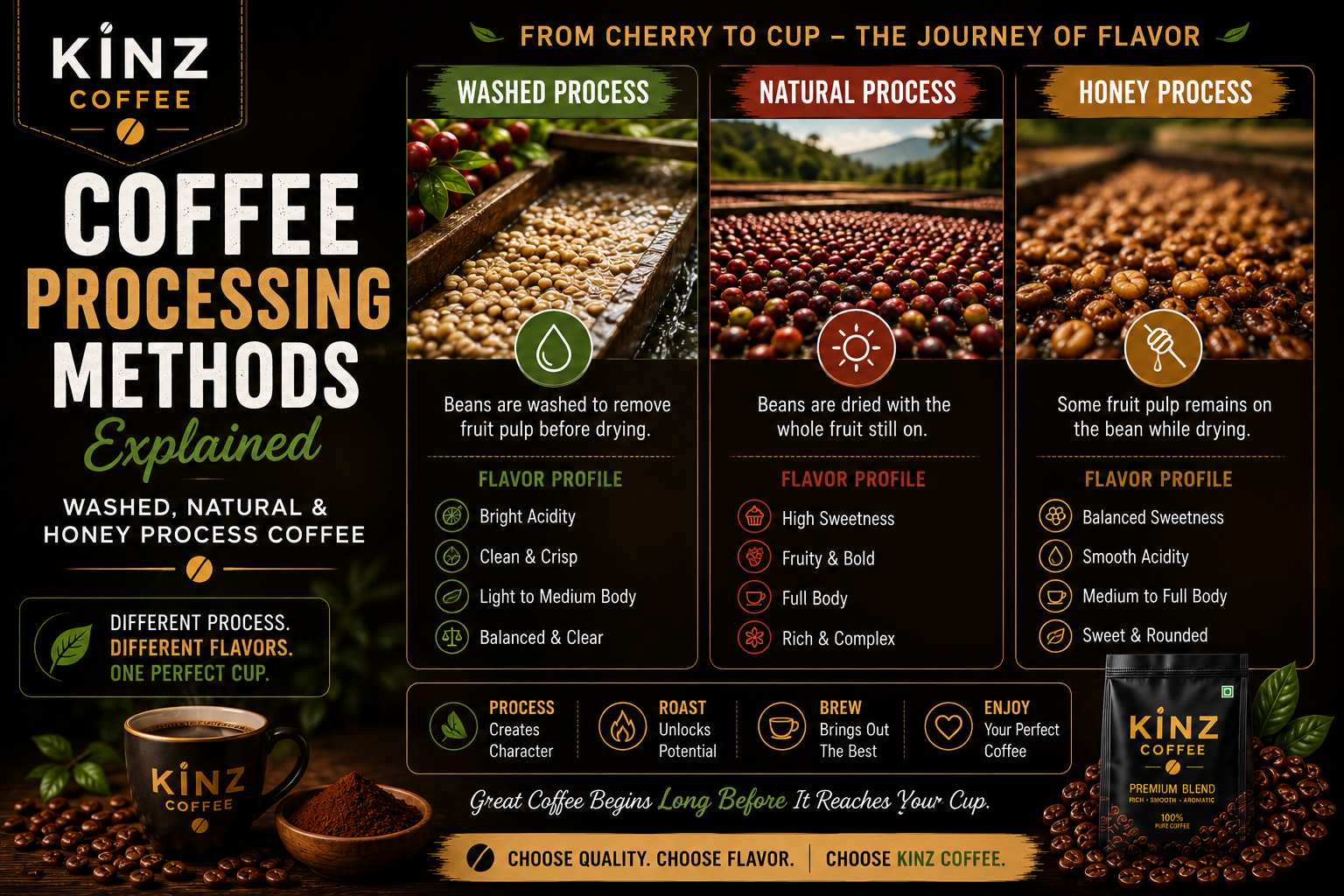
Coffee Processing Methods Explained: Washed, Natural & Honey Process Coffee
Every great cup of coffee begins long before the beans are roasted. One of the most important steps in coffee production is coffee processing. The way coffee cherries are processed after harvesting directly affects the flavor, aroma, sweetness, body, and acidity of your final cup.
If you've ever wondered why two coffees made from the same beans can taste completely different, the answer often lies in the processing method.
What Is Coffee Processing?
Coffee processing is the method used to remove the fruit surrounding the coffee bean after harvesting.
Different processing techniques preserve different amounts of the fruit during drying, resulting in unique flavor profiles.
The Three Main Coffee Processing Methods
- Washed Process
- Natural Process
- Honey Process
1. Washed Process Coffee
In the washed process, the outer fruit is removed before the beans are dried. The beans are then washed with clean water to remove any remaining fruit.
Flavor Profile
- Clean taste
- Bright acidity
- Crisp finish
- Balanced flavors
This method highlights the natural characteristics of the coffee bean.
2. Natural Process Coffee
Natural coffee is dried with the entire coffee cherry still surrounding the bean.
As the fruit dries, natural sugars are absorbed into the bean, creating a sweeter and fruitier flavor.
Flavor Profile
- Sweet
- Fruity
- Full-bodied
- Complex aroma
3. Honey Process Coffee
Honey process coffee is a balance between washed and natural processing.
Part of the fruit is removed while a sticky layer of natural sugars remains on the bean during drying.
Flavor Profile
- Sweet
- Smooth
- Balanced acidity
- Rich body
Comparison Table
Processing Method Sweetness Acidity Body Flavor
Washed
Medium
High
Light
Clean & Bright
Natural
High
Medium
Full
Fruity & Bold
Honey
Medium-High
Balanced
Medium-Full
Sweet & Smooth
Which Coffee Processing Method Is Best?
There isn't a single "best" processing method. The ideal choice depends on your personal taste preferences.
- Love clean and bright coffee? Choose washed coffee.
- Enjoy fruity and bold flavors? Try natural coffee.
- Prefer balance and sweetness? Honey process coffee is an excellent choice.
Why Coffee Processing Matters
Processing influences much more than taste. It affects aroma, mouthfeel, sweetness, acidity, and the overall coffee experience.
Understanding processing methods helps coffee lovers appreciate why premium coffees often taste unique and memorable.
Experience Premium Coffee with Kinz Coffee
At Kinz Coffee, quality begins with carefully selected coffee beans and expert craftsmanship. Every cup is designed to deliver a smooth, aromatic, and enjoyable coffee experience.
Explore Premium Coffee → https://kinzcoffee.com/products
Related Coffee Guides
- Arabica vs Robusta Coffee
- Best Coffee Beans in India
- Coffee Bloom Explained
- The Art of Brewing the Perfect Cup of Coffee
Final Thoughts
The journey from coffee cherry to your cup involves many important steps, and processing is one of the most influential. Whether you enjoy the bright clarity of washed coffee, the fruity sweetness of natural coffee, or the balanced richness of honey process coffee, understanding these methods can help you choose coffee that perfectly matches your taste.
Frequently Asked Questions (FAQs)
What is coffee processing?
Coffee processing is the method used to remove the fruit from harvested coffee cherries before drying and roasting.
Which coffee processing method is the sweetest?
Natural process coffee is generally the sweetest because the beans dry inside the fruit, absorbing natural sugars.
What is honey process coffee?
Honey process coffee leaves part of the fruit on the bean during drying, creating a balanced cup with sweetness and smooth body.
Does processing affect coffee taste?
Yes. Processing has a major impact on sweetness, acidity, body, aroma, and overall flavor.
Which processing method is best for beginners?
Washed coffee is often recommended for beginners because it offers a clean, balanced, and easy-to-enjoy flavor profile.